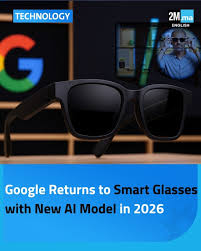

The year 2026 marks a turning point in wearable technology, and AI Smart Glasses 2026 are at the center of this revolution. What once seemed like science fiction — glasses that translate languages in real time, recognize objects instantly, and provide contextual information — is now entering mainstream consumer markets.
AI smart glasses combine artificial intelligence, augmented reality (AR), and compact computing power into a lightweight wearable device. These glasses are no longer experimental gadgets; they are becoming practical tools for work, communication, health, and entertainment.
As major technology companies and startups compete to refine their designs, AI smart glasses are poised to reshape how humans interact with digital information. This guide explores the latest developments, features, benefits, and future trends surrounding AI Smart Glasses 2026.

What Are AI Smart Glasses?
AI smart glasses are wearable devices that integrate:
- Artificial intelligence processors
- Augmented reality displays
- Cameras and sensors
- Voice assistants
- Wireless connectivity
Unlike traditional eyewear, AI Smart Glasses 2026 act as an intelligent interface between the user and the digital world. They overlay useful data onto the user’s field of vision and respond to voice or gesture commands.
Modern AI smart glasses focus on practicality rather than novelty. They are lighter, more energy-efficient, and designed for everyday use.
Key Features of AI Smart Glasses 2026
1. Real-Time AI Assistance
One of the most impressive features of AI Smart Glasses 2026 is instant AI support. Users can:
- Ask questions and receive visual responses
- Get navigation directions overlaid in their view
- Access reminders and schedules
- Perform quick searches without using a phone
This hands-free interaction improves productivity and convenience.
2. Live Language Translation
AI smart glasses can now translate spoken language in real time. This feature is especially useful for:
- Travelers
- International business meetings
- Education and cultural exchange
Subtitles appear discreetly in the user’s vision, breaking down language barriers.
3. Augmented Reality Integration
Augmented reality adds contextual digital elements to the real world. In 2026, AR in smart glasses enables:
- Interactive navigation
- Training simulations
- Visual instructions for repairs or assembly
- Immersive entertainment experiences
The AR displays are clearer and more natural than earlier prototypes.
4. Advanced Visual Recognition
AI Smart Glasses 2026 use computer vision to recognize:
- Objects and landmarks
- Faces (with privacy controls)
- Text and documents
- Products and barcodes
This capability supports accessibility features and enhances daily tasks.
5. Health and Fitness Tracking
Many smart glasses now include sensors for:
- Eye strain monitoring
- Posture tracking
- Activity insights
- Wellness reminders
Wearable AI is increasingly linked to personal health management.
Leading Brands Driving AI Smart Glasses 2026
Several technology companies are shaping the AI eyewear landscape. Competition has accelerated innovation and affordability.
Major Industry Players
- Global tech giants investing in AR ecosystems
- Wearable technology startups specializing in AI optics
- Smartphone manufacturers expanding into smart eyewear
- Enterprise-focused AR solution providers
These companies are prioritizing sleek design, battery life, and seamless AI integration.
Comparative Analysis: Top 5 AI Smart Glass Wearables in 2026
Below is a detailed comparative analysis of the leading AI Smart Glasses 2026 — including specs, features, strengths, and ideal use cases — to help you understand how each one stands out in the evolving wearable AI ecosystem.
1. Ray-Ban Meta Gen 2 — Best Overall AI Smart Glasses (2026)
Overview:
The Ray-Ban Meta Gen 2 is widely regarded as one of the most balanced and accessible AI Smart Glasses in 2026, combining a classic fashion-forward frame with practical AI features.
Key Features:
- Integrated AI assistant that responds to voice commands
- 12 MP camera for photo/video capture
- Open-ear audio and microphone array for hands-free calls and audio feedback
- Real-time translation and object understanding
- Stylish everyday design
Strengths:
- Natural look and feel like traditional sunglasses
- Good ecosystem integration with social and smart services
- Balanced battery life and camera performance
Weaknesses:
- Limited display capability (no full AR overlay)
- Battery life can vary with heavy AI use
Best For: Social media creators, daily users who want practical AI without bulky hardware.

2. Solos AirGo V2 — Best for Multimodal AI Interactions
Overview:
The Solos AirGo V2 stands out in 2026 for offering multimodal AI interaction — meaning it can understand images, video, audio, and text to provide contextual insights and assistance.
Key Features:
- 16 MP camera with electronic image stabilization
- Live video capture and streaming
- Low-power Wi-Fi connectivity
- AI support from multiple major models (e.g., ChatGPT, Gemini, Claude)
- Modular design with swappable battery and frames
Strengths:
- Versatile visual AI capabilities (identify objects, translate text, answer queries)
- Modular hardware for extended use
- Competitive price for advanced AI features
Weaknesses:
- Display features are limited compared with full AR headsets
- Some features may require cloud connectivity
Best For: Users who want powerful visual AI interaction and contextual understanding without heavy AR hardware.

3. Even Realities G2 — Pro-Level AI Conversation Glasses
Overview:
The Even Realities G2 focuses specifically on conversation support and contextual cues using AI. Its standout functionality is analyzing real-world conversations and providing transcriptions, summaries, and prompts in real time.
Key Features:
- Real-time teleprompter and transcription capabilities
- Conversational feature for contextual conversation processing
- Bright heads-up display with optical upgrades (HAO 2.0)
- Discreet camera-free design
Strengths:
- Excellent for meetings, interviews, or note-taking
- Lightweight and professional design
- Large HD display area
Weaknesses:
- Software may be unstable or require frequent updates
- Bluetooth connectivity issues reported
- Higher price point
Best For: Professionals and productivity users who need real-time conversation support and contextual AI assistance.

4. Oakley Meta HSTN — Best for Sports & Media Capture
Overview:
The Oakley Meta HSTN is designed with athletes and outdoor enthusiasts in mind, blending AI features with robust media capture and wearability.
Key Features:
- 12 MP ultrawide camera for POV photo/video
- Open-ear Bluetooth audio with voice command support
- Up to ~8 hours of battery life
- Onboard storage and music streaming features
Strengths:
- Great for capturing moments hands-free during sports or outdoor activities
- Solid battery life and storage capacity
- Multiple frame designs and rugged build
Weaknesses:
- Limited AR display and deeper AI context features
- The camera and AI package are multimedia-centric rather than AI-first
Best For: Outdoor users, athletes, and adventure seekers who want AI-enhanced media capture.

5. XGIMI MemoMind (Memo One) — Best for Display + Contextual AI
Overview:
The MemoMind Memo One series from XGIMI prioritizes multimodal AI assistance with a focus on comfort and everyday use, closely resembling normal eyewear.
Key Features:
- Multi-LLM intelligent routing (e.g., selection between OpenAI, Azure, Qwen based on task)
- Models geared toward translation, summarization, and contextual info
- Multiple frame styles and prescription options
- Lightweight with built-in speakers
Strengths:
- Comfortable and discrete design suitable for all-day wear
- Dynamic AI model selection for task-optimized responses
- Customizable hardware
Weaknesses:
- Formal specs on battery life and AR display capability are still emerging
- Premium price tier
Best For: Users seeking a comfortable, everyday AI companion that blends fashion with smart features.

How AI Smart Glasses Are Used in Everyday Life
1. Workplace Productivity
Professionals use AI smart glasses for:
- Hands-free communication
- Remote collaboration
- Real-time data visualization
- Field service support
Industries such as healthcare, engineering, and logistics benefit significantly.
2. Education and Learning
Students and educators use AI smart glasses to:
- Access interactive lessons
- Receive guided instructions
- Explore immersive simulations
- Enhance accessibility for learners with disabilities
This technology is redefining digital education.
3. Travel and Navigation
AI Smart Glasses 2026 improve travel experiences through:
- Real-time translation
- Smart navigation overlays
- Instant cultural information
- Safety alerts
Tourists can explore unfamiliar places confidently.
4. Entertainment and Social Interaction
Smart glasses enhance entertainment by offering:
- AR gaming experiences
- Live streaming capabilities
- Social media integration
- Immersive storytelling
The boundary between digital and physical entertainment is fading.
Benefits of AI Smart Glasses 2026
Enhanced Productivity
Hands-free computing allows users to multitask efficiently without constant phone interaction.
Improved Accessibility
AI smart glasses assist people with visual or hearing impairments through real-time assistance.
Seamless Connectivity
They integrate with smartphones and cloud services for continuous access to information.
Personalized AI Experience
Machine learning adapts to user behavior, offering tailored recommendations.
AI Smart Glasses 2026 Market Trends
Miniaturization of Hardware
Components are becoming smaller and more energy-efficient, improving comfort.
Cloud-Based AI Processing
Offloading computation to the cloud enhances performance and battery life.
Integration with Smart Ecosystems
AI smart glasses are connecting with smart homes, vehicles, and IoT devices.
Enterprise Adoption
Businesses are investing heavily in wearable AI for operational efficiency.
The Future of AI Smart Glasses Beyond 2026
The next phase of development may include:
- Brain-computer interface experimentation
- Holographic AR displays
- All-day battery solutions
- Deeper AI personalization
- Seamless integration with everyday eyewear fashion
AI smart glasses are evolving toward becoming as common as smartphones.
Conclusion: A New Era of Wearable Intelligence
AI Smart Glasses 2026 are redefining how humans interact with technology. By merging artificial intelligence with wearable design, these devices bring digital intelligence directly into our line of sight.
As hardware improves and AI becomes more sophisticated, smart glasses are likely to become an everyday essential. Businesses, educators, and consumers who embrace this technology early will gain significant advantages in productivity, communication, and innovation.
The future of wearable computing is no longer handheld — it’s wearable, intelligent, and right before our eyes.